Andy Burnham is a Catholic
What made our next prime minister – and some recommended listening

I noticed it as soon as I turned off the M6 and into Ashton – how could I not? The road into town narrows and, as it abuts the pavement, this squat concrete box looks a bit like a tollgate. There’s no missing the sign, either: ST OSWALDS CATHOLIC CLUB.
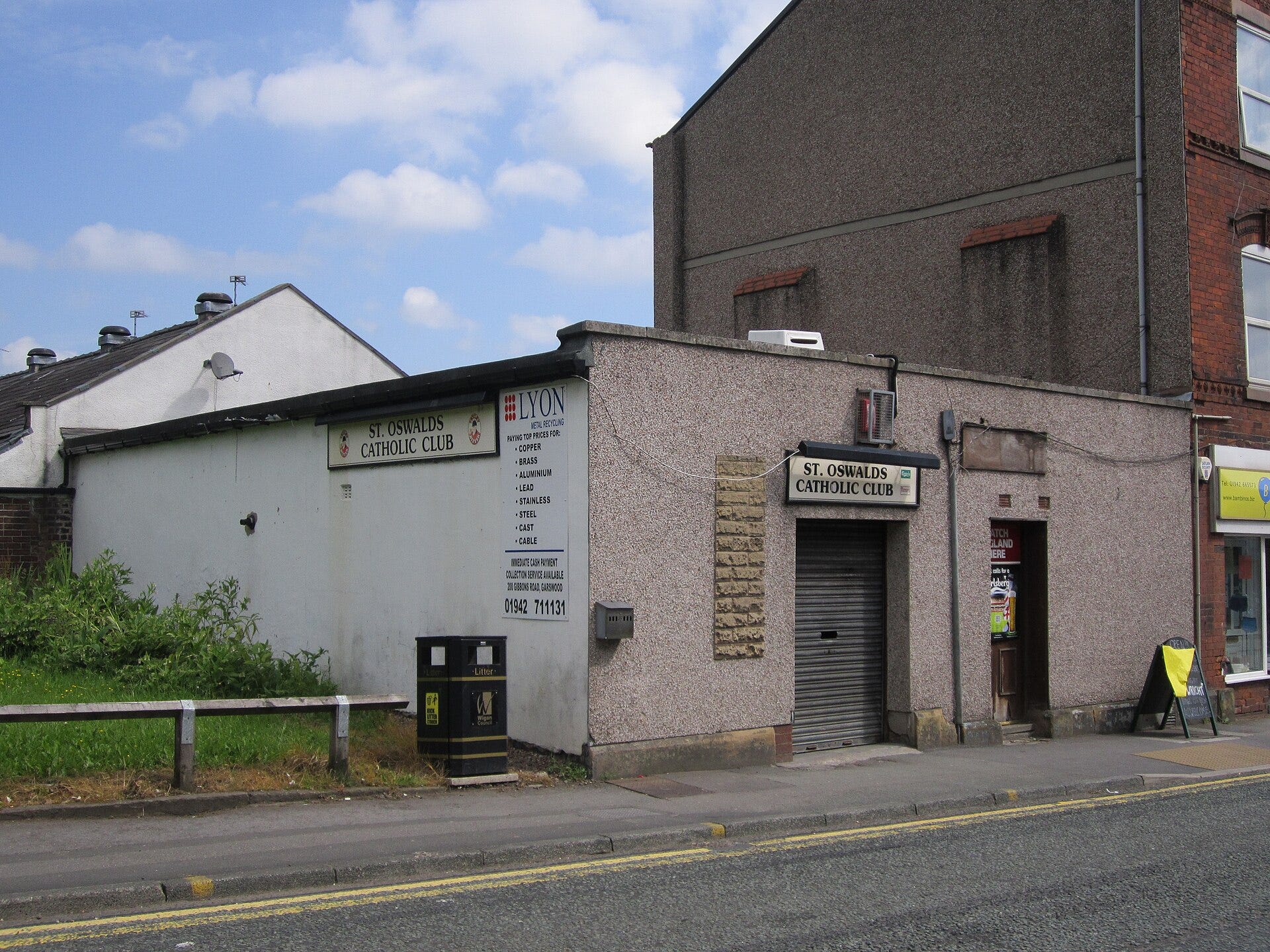
The significance I attribute to this little tableau in last weekend’s Times Saturday essay might be lost on lobby colleagues who have approached Ashton – the one in Makerfield, the home of the now legendary Stubshaw Cross Labour Club, and to most outsiders the sum total of what they see of the constituency – in an Uber from Wigan North Western.
But on every weekend of this campaign I have driven in from Southport, and so St Oswalds – yet and perhaps never to attain the same notoreity of the one a mile north-east – took up residence in an outsized plot of my subconscious. As I first drove past on the morning Andy Burnham launched his campaign to become MP for this club, that club and the chapels that once set the rhythm of life in these corners of Wigan, I did wonder whether he’d ever drank in there.
I’m sure he will soon. For Andy Burnham is a Catholic. To say so in Wigan borough or Liverpool or Manchester, to name but three of the places he might claim as home, would be utterly unremarkable – sure, isn’t everyone round here? But as he prepares to take that same train back to Westminster on Monday, this ordinary fact of south Lancashire life rewards a moment’s reflection.
Burnham knows that he will be the first true Catholic prime minister his country has ever known. I have been told he feels the historical and cultural weight of owning a distinction what will to many people seem like an anachronistic irrelevance, or, at best, a contested pub quiz answer.
To be clear, by that I mean a cradle Catholic who lived and breathed the faith into which he was born. Set this standard and Boris Johnson and Tony Blair, lapsed and a convert respectively, do not really count. Andy Burnham is a Catholic, the kind of Catholic everyone born and raised in the northwest of England will know, and it explains much that Westminster otherwise struggles to understand or take seriously about his political identity. And that’s what the essay, which – as ever – you should subscribe to The Times to read in full, was all about.

I spent some time with Burnham in what is now his constituency a few weeks ago, and, while we did not speak about the Church, or Catholicism for more than a sentence or two, the Catholic Church – or rather the popular, cultural Catholicism he embodies – was everywhere. We met, one Saturday lunchtime, at Wigan St Jude’s rugby league club in Worsley Mesnes. At the bar he reminisced about his son’s youth games and of other clubs like Leigh Miners and St Pat’s. And there it was, defiantly alive, if only in 13 men and inherited iconography: the old collective life the mineworkers and massgoers knew.
Then we watched the Challenge Cup final. That made for another piece in The Times, which you can read here. Anyway, Wigan won, and the celebrations went undisturbed thanks to a Burnham moratiorium on canvassing. I repeated to him something I’d been told on a previous visit to the Makerfield constituency – by an old local who had all but given up on the old politics. These towns had been once been defined by – built by – the Labour Party, Catholic Church and rugby league. Together they were the totality of working class experience. Now the people only really bothered with league, a sport whose administration has come to look as dysfunctional as those other two institutions.
I suppose this is what David Storey was predicting – or hoping against hope for – at the elegaic end of This Sporting Life. Storey, himself an accomplished league player, is remembered as one of the angry young men of Sixties letters but this is really a sad, hopeless novel about the ever-narrowing horizons of manhood in that England, and the inevitable violence that follows both acquiesence and resistance. At the end of the story, an entire town has lined the streets to doff their caps to an industrialist’s hearse. His name is Slomer, and he owned the people’s work (the factory) as well as their play (the rugby league team).
The mourners know they are bidding farewell to something more than a man. The Sixties have only just begun but already the old paternalism and sense of place feels threatened by what we’d now just call globalisation. Note the name of the landmark church.
‘With Slomer gone,’ the man told him, ‘you’ll find the big combines finding it easier to move into town. You mark my words. There’ll be no king-pin anymore. We’ll become like all the other big towns – socialist, impersonal, anonymous. The only thing we’ll be known by’ – he waved his gloved hand at me – ‘will be the standard of our football team.’
He stared out at the crowd as the column wound up Market Street towards St Teresa’s. It was hot. ‘Just look at that,’ he said. ‘There won’t be any more funerals where half the town lines the streets to watch the passing of a man they hardly knew…’ He flicked his gloved fingers. ‘We’ll have a football team.’
George fingered his tight collar. ‘And thank God for that,’ he said.
Storey was writing about Yorkshire but so it subsequently proved in Wigan, and thank God for that indeed. Without league there’d be little else. Here we might pause to note that Tony Blair, one of the guilty men of Burnham’s forty years of neoliberalism, said in 2005 that his favourite Premier League player was Wigan Athletic’s Arjan de Zeeuw. The only thing we’ll be known by will be the standard of our football team, and even then it’ll be the wrong code.
Note too that St Jude is the patron saint of lost causes. When he announced his candidacy for Makerfield last month, Burnham appeared to have taken one on. It was, as Morrissey sang on Well I Wonder – the sort of Smiths album track both the incumbent prime minister and the next one say they were mainlining in their youth – “the final stand of all I am”. And this victorious Labour campaign proved that the old political certainties – that voters in Ashton and Bryn and Hindley will vote for the party that was made in and for their towns – are gasping, dying… but somehow still alive…
Burnham did it with a message that Westminster tastemakers and his goggle-eyed critics in government find insultingly, infuriatingly Panglossian. Hope, change, abolish the whip, public control, Northern Soul, keep the faith, our Andy, that London, babby’s yed on a buttered barm, don’t you dare cross Anneliese and Lou, place first, change Labour but only once I’ve bought a parakeet at the Stubshaw Cross exotic bird auction. There is a popular school of elite criticism on this guy – he went to Cambridge and worked for Tessa Jowell and ran from the right defending Iraq in 2010 and then he said his favourite biscuit was chips and gravy ha ha ha – and to its foremost scholars the past month will have seemed like an exercise in self-parody.
And the critics might well be turn out to be right about Burnham’s flaws and the fiscal rules and whatever else. Even his allies admit there’s not much meat on those bones yet. What they aren’t getting, though, is the man. I put that line about Makerfield to him – the one about Labour and the Church and rugby league. He laid down his Cruzcampo and replied, a little wistfully, that he always used to say that there were only three institutions that mattered to him – the Holy Trinity of Burnhamism. Everton FC, the Labour Party, and the Catholic Church, “in that order”. And he did always used to say that, long before he was a candidate for the Labour leadership.
Now he is the MP for a Catholic constituency and will be our first Catholic prime minister. He – and the constituency – wear it lightly, though one of his enforcers would only take a butter pie from Galloway’s bakers on Fridays. It’s about culture, not doctrine. But neither can escape it. In Makerfield’s towns and churches and pubs and clubs and schools and rugby league shirts is the entire history of northern Catholicism: the recusants and then the Irish, the rich and the poor, both struggling for dignity, freedom of belief and political expression London had denied them. They found it in the Labour Party their descendants were on the brink of abandoning before Burnham came back. Once you understand that this is the world he inhabits, all that is vague can at last seem precise. His values were born of time and faith and place.
We could start in the Sir Thomas Gerard, the Wetherspoons in Ashton named after a recusant patriarch. Or up the road, opposite the Catholic club – now officially renamed, like the Labour clubs in Bryn and Hindley and indeed Stubshaw Cross, as a mere social club – at the Church of St Oswald and St Edmund Arrowsmith. The latter of those two saints was martyred for his priesthood in 1628 and gave his name to Eddie Arrow’s, the Catholic school to which Burnham sent his three kids and Reform UK’s Robert Kenyon himself attended. Both mentioned it to me. Arrowsmith’s black and withered hand still sits in a little glass jar inside the chapel. Every year they take it to Brindle, near Chorley, for a mass in the attic of a house where Arrowsmith used to preach in secret.
There are martyrs everywhere in Makerfield. Orrell has St John Rigby College, named for one of the few laymen among the Forty Martyrs of English Catholicism. Even on the scaffold at Newgate, where he was executed in 1600, he refused to recant. He believed til the very last. Thomas Worthington, another Wigan recusant, wrote a memoir of Rigby’s martyrdom the following year: “The deputy asked him, what traitors dost thou know in England? God is my witness, said he, I know none.” He prayed “cheerfully” for Queen Elizabeth. It so enraged his executioners that one put his boot on Rigby’s neck. It silenced him in life but not posterity.
Arrowsmith was the same. In the dock, he spoke in sorrow, not anger.
Be witnesses with me that I die a constant Roman Catholic and for Christ’s sake. Let my death be an encouragement to your going forward in the Catholic religion… Nothing grieves me so much as this England, which I pray God soon to convert.
It was not so much God that converted the parishes of south Lancashire to out and proud Catholicism, but Ireland. They came and dug the coal, milled the cotton, worked the machines, loaded the ships, laid the bricks. Lots in Wigan, of course – between St Oswald’s and Stubshaw Cross, on the Bryn Road, is the Brian Boru, one of the oldest Irish clubs in England – but many more in Liverpool, the city of Burnham’s birth. And the time and faith and place of which I wrote above add up to Derek Worlock’s Archdiocese of Liverpool in the 1980s.
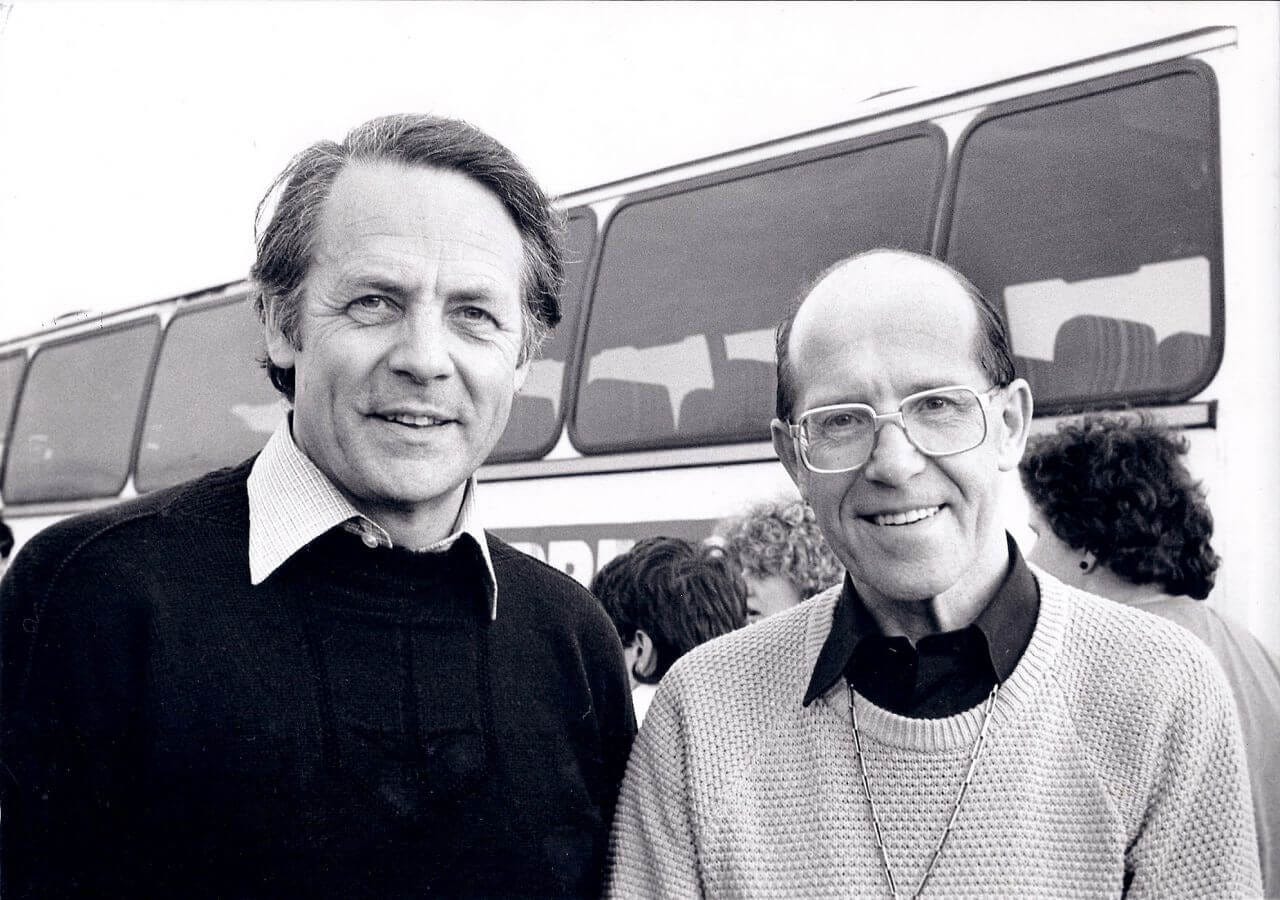
To the extent that Worlock is remembered outside of Liverpool now, it is as one of the many men of cloth who became moral critics of Thatcherism. And that is what he was. Clashing with the police over Toxteth, vainly seeking to mediate between Scargill and the National Coal Board – did Burnham think of that when he saw the miners picketing Golborne colliery on the way to school? – sending Pope John Paul II’s motorcade through the charred wreckage of Liverpool 8. Burnham remembers him as the high priest of a practical Catholicism, conscious of the need for a new ministry designed for the urban working class. “I am my brother’s keeper,” Worlock said in 1990, “and he’s sleeping pretty rough these days.” Like Burnham, he was no fundamentalist. He took a hard line against Opus Dei and clashed with Rome over contraception and gluten-free communion wafers.
A few years later, in 1994, came a film called Priest. Jimmy McGovern wrote the screenplay. Linus Roache stars as Father Greg, a tortured young clergyman in a Liverpool parish. He’s gay, and his priest in charge, the strident leftie Father Thomas – played by Tom Wilkinson – is sleeping with his housekeeper. In confession, a schoolgirl tells Father Greg that her own father is sexually abusing her. He cannot bring himself to violate the sacrament. He picks up a man in a club and enters into a relationship with him. The girl’s mother discovers the abuse, and blames Greg. The police happen upon him and his boyfriend in a car park, then arrest him. But Father Thomas forgives him. He invites Greg back from rural exile and lets him administer communion.
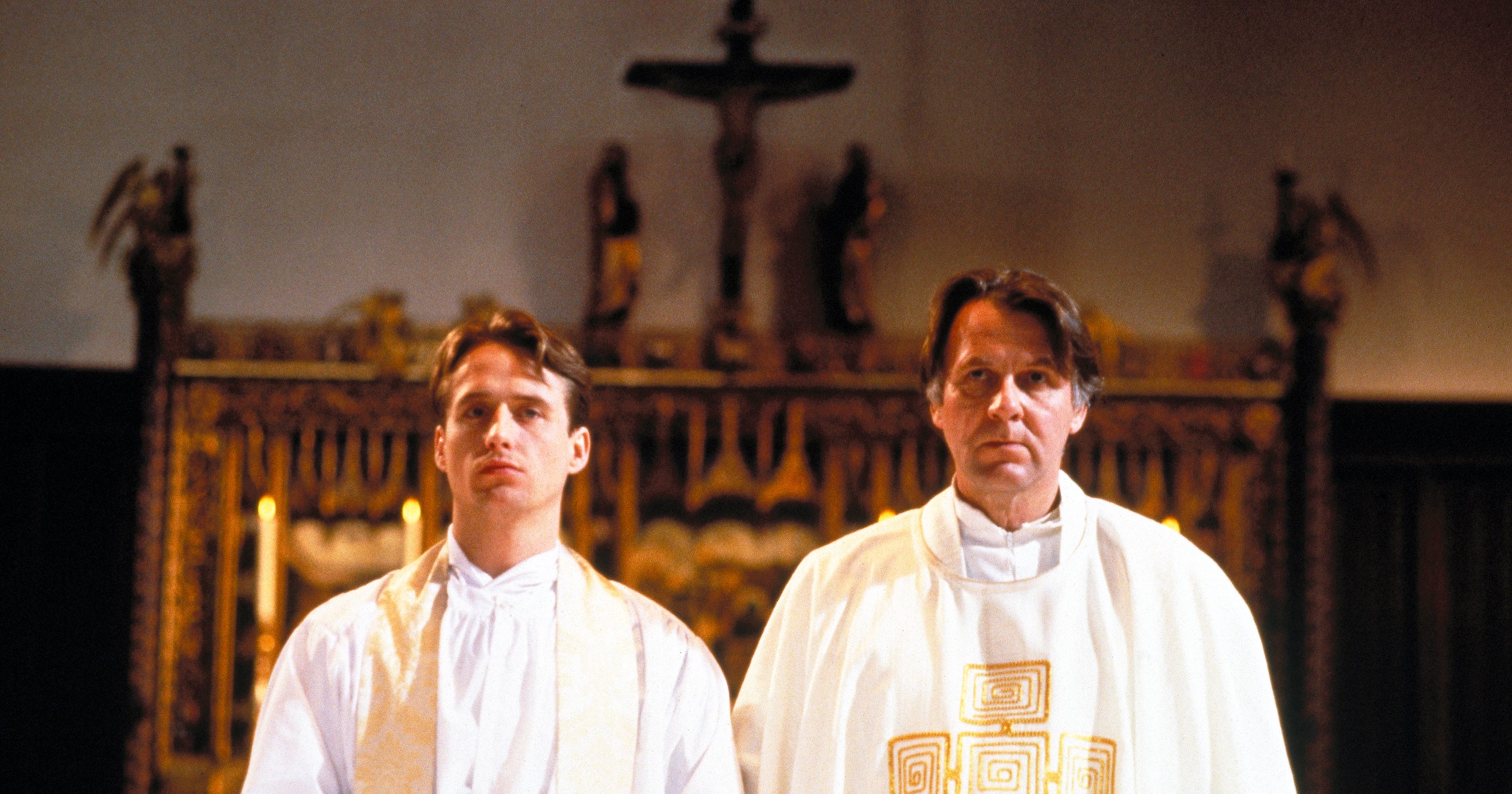
McGovern and Antonia Bird, the director, wanted to film it in Liverpool. But they were rumbled. The plot and its implications seemed scandalous – sacreligious. Worlock, however, did not judge. Here’s McGovern.
When we did Priest we lost all our locations once word got out about the subject. No one in Liverpool would have anything to do with us so we had to bus 60 kids down to London in their communion frocks to film but when Derek Worlock watched it he called it a profoundly Catholic film and said what’s all the fuss?
This was the faith in which Burnham was raised. Again, a practical Catholicism, not a doctrinal one. On the centenary of Leo XIII’s Rerum Novarum, Worlock unwrapped a copy of that encylical with theatrical flourish. Catholic social teaching, he said, was “the Church’s best-kept secret”. But not in the Culcheth church where Burnham was the altar boy, pressing play on tapes of Worlock’s sermons. “The stuff in the catechisms, and what I heard Worlock say,” he has said, “the political implementation of it was the Labour Party.” It’s not the Catholicism of JD Vance or even Tony Blair. Burnham knows this: the first time he ran for the Labour leadership he admitted neither he nor his mother Eileen, from whom he inherited his faith, were ones for “licking the altar steps”.
It wasn’t just Worlock, of course. In 2015, Burnham cited Boys from the Blackstuff as a crystallising influence on his inchoate, teenage politics. He spoke specifically of Yosser’s descent into madness – the slow and then sudden surrender of all his sanity and self-respect. And where does Yosser Hughes go when he knows he cannot sink any lower, when all the machismo is gone? Wheezing, weeping into the confessional.
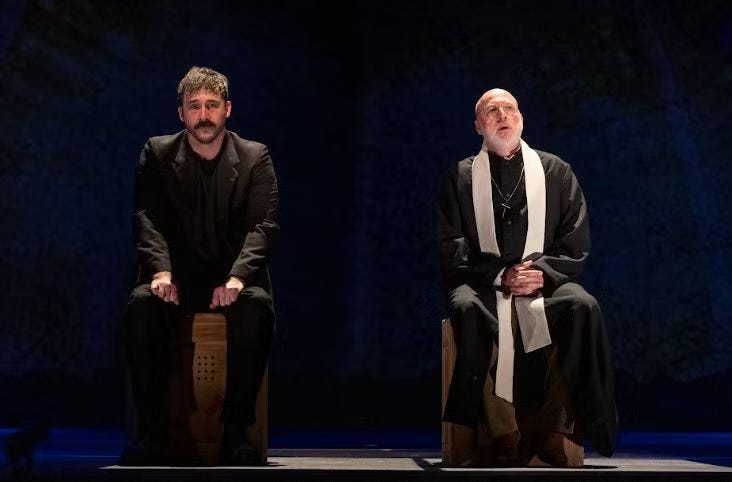
“Father... father...”
“Yes?”
“I’m... I’m... I’m... I’m Yosser Hughes. I’m desperate, father.”
“It can be a desperate world at times, Mr Hughes.”
“Yosser Hughes.”
“It can be a desperate world at times, Yosser Hughes. Tell me, would it make it any easier if... a trouble shared in a place of peace, my son. A haven... I’m Father Thomas. Doubting for short. Doubting Thomas. Daniel Thomas. I’m here to help you, Yosser Hughes. Daniel – don’t worry about the Father.”
“I’m desperate, Father.”
“Call me Dan. Dan.”
“I’m desperate, Dan.”
The new trad types wouldn’t think it deserved this deserved to be called Catholicism at all. The most authentic rebuttal to this charge of wanting piety comes from Joe Gormley, the Ashton-born NUM leader I quote in the essay. He was a Wigan Catholic too, and, like Burnham, not one for hugging the altar. He and his pit mates liked a drink, a wager, whatever. But, Gormley said: “I don’t believe you have to go to church every Sunday to be a good, or even a religious, person.”
This kind of Catholicism was impossible to escape in Worlock’s Liverpool. Consider the music. Like the rugby league shirts of the clubs for which Burnham is now member of parliament, it reflects without theological or doctrinal endorsement the prevailing culture. Take this forgotten anthem, Pete Wylie’s last proper hit.
Hey Joe, I’ve never understood
When the elders are so wicked, why should we be good?
It’s sinful (sinful)
So true…
Don’t cry, don’t let it get you down
Hey Joe, we oughta try and turn the world around
It’s sinful (sinful)
So true, boo hoo…
Or this, from OMD. These aren’t really Catholic songs but songs that could have only been written by bright kids in a Catholic city, doubtful and questioning of authority – holy and secular – yet still laden with the cultural baggage they picked up involuntarily at birth. See also: Newcastle’s Neil Tennant.
Burnham files Everton alongside all this too. Solidarity, the “underdog” – classic Bluenose – the conviction that Thatcherism was at the end of the day just an affront to human dignity. “Yes, I do go to church,” he said in 2007. “I am a Catholic. It’s a bit like being an Everton supporter – once a Blue, always a Blue.” The belief is unthinking, and I don’t mean that pejoratively. These values – woolly though they may seem, if fellow sons and daughters of Merseyside’s outer boroughs will pardon that pun – were just indisputably true. Injustice was done to working people in Liverpool and its environs by what Burnham still calls “the London set”. Scouse political mythology hymns a “city that dared to fight” under the leadership of Derek Hatton.
But, as another old archbishop told me the other day, it was the other Derek – the one who dared to forgive – who played the crucial role in Burnham’s political formation. It’s all about values and culture. The specifics of the doctrine or smallprint of this policy or that don’t matter so much if you stay true the other two. Father Derek, not Brother Degsy. Francis, not Benedict.
Anyway, that – in case you were wondering – is what he believes. Let’s see how it works out in government.
This is great. I wonder if another influence was the liberation theology that would have dominated intellectual discussion among Catholics when Burnham was a young man?
Sounds like Greek orthodoxy. Lightly carried but its values are the water you swim in. Place and culture based. Uncomplicated.